Vino Gross
- Vineyards
- 19 hectares in Haloze, 4.5 in Maribor
- Certification
- Certified organic, biodynamic practice
- Membership
- SVL – among the founders
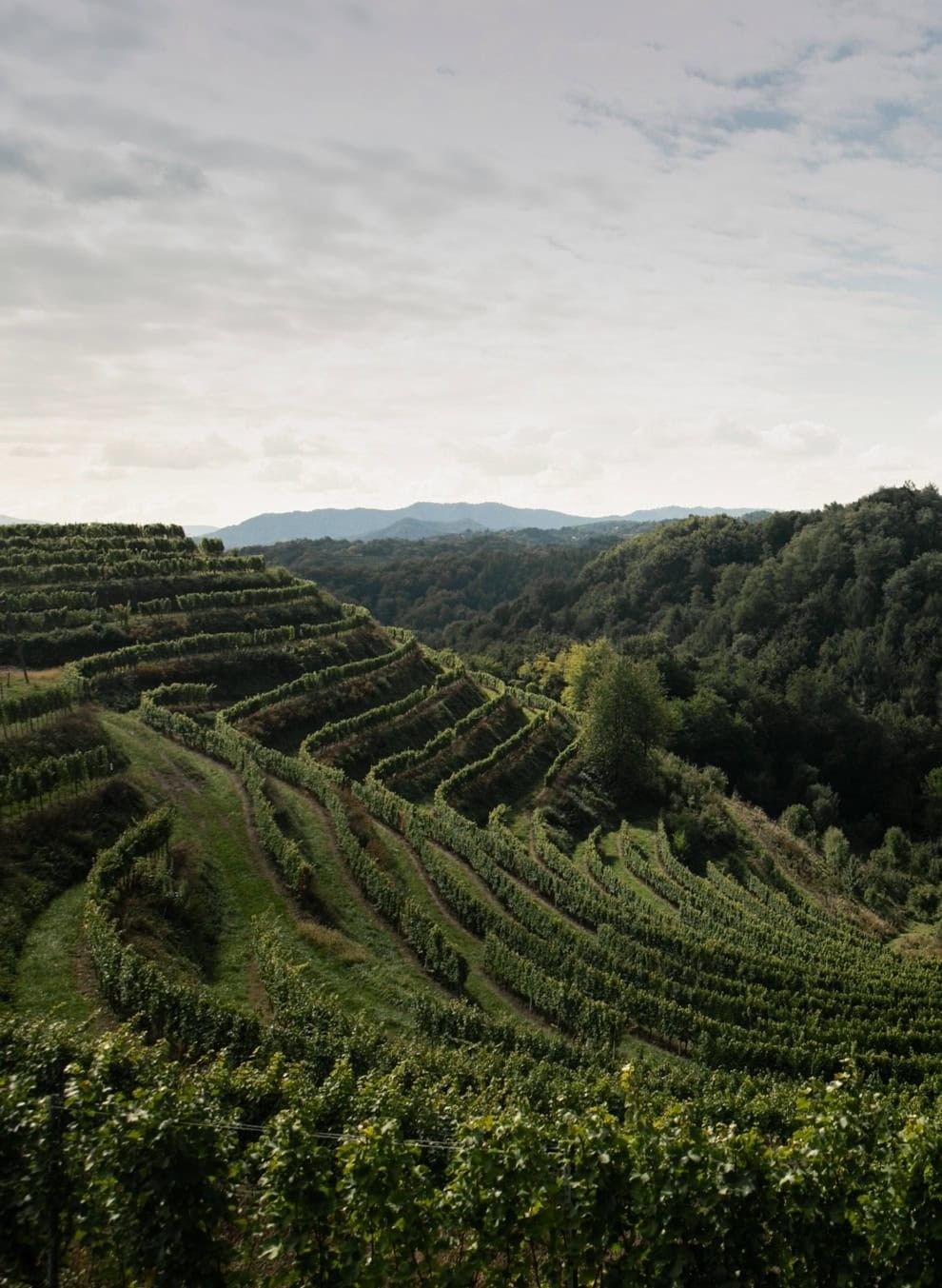
Single-row terraces in the Gorca vineyard, Haloze
In 2004 Michael and Maria Gross received a surprising letter from Vienna, from a woman they did not know. She returned to them a family property on the Gorca hill in Slovenia. Since 2016, when the family's estates were divided, they have managed about 23 hectares (19 in Haloze and 4.5 in Maribor) at elevations of 300–500 m, producing up to 35,000 bottles a year.
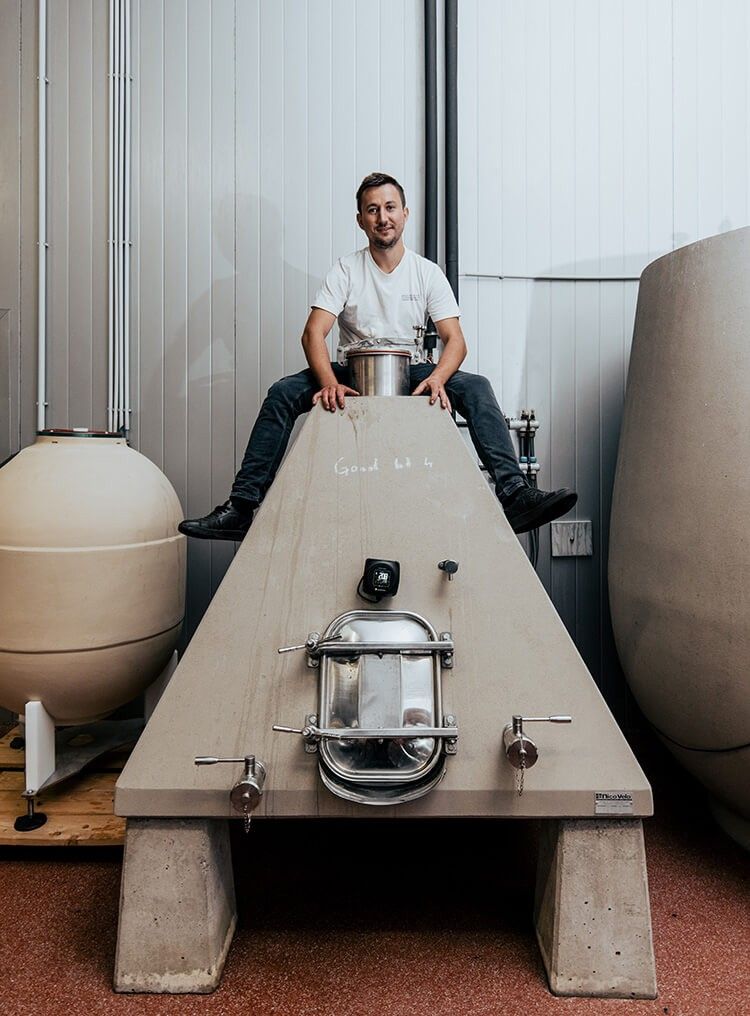
The vineyards are planted on single-row terraces on steep slopes with gradients reaching 65%, on Opok soil, the local name for a combination of limestone and clay (marine marl). All the white wines are made by one method: up to two hours of skin contact, then settling. Michael tastes the sediment itself to decide how much of it to use later on. "Racking is always my decision," he says, "because in low-intervention work there aren't many points where I can have an influence." Fermentation takes place in large wooden casks with no additives, followed by a year on the gross lees and another six months to a year on the fine lees, and only then is the decision on adding sulfur made. About 70% of the estate's wines are bottled with no added sulfur at all. In Falstaff's 2023 Slovenia tasting, the estate's wines Sveto, Iglič and Gorca took the top three places. The Grosses are among the founders of the SVL, an organization that classifies Slovenian wines by origin.
The estate's wines
The estate's wines will reach the shop soon.
The estate's light red, made as an ever-changing experimental edition.
Quince, pear and mandarin. A dry, creamy white blend.
Pear, apple and lemon resting on straight minerality and a salty finish.
The winery's calling card and the only official Cru in Haloze.
Furmint clones from Tokaj, yielding a deep, salty wine from a select parcel.
The winery's flagship wine. A single barrel only, in selected vintages.