Marto Wines
- Vineyards
- Flonheim, Rheinhessen
- Certification
- Organic (producer's declaration)
- First vintage
- 2016 – one in France and one in Germany
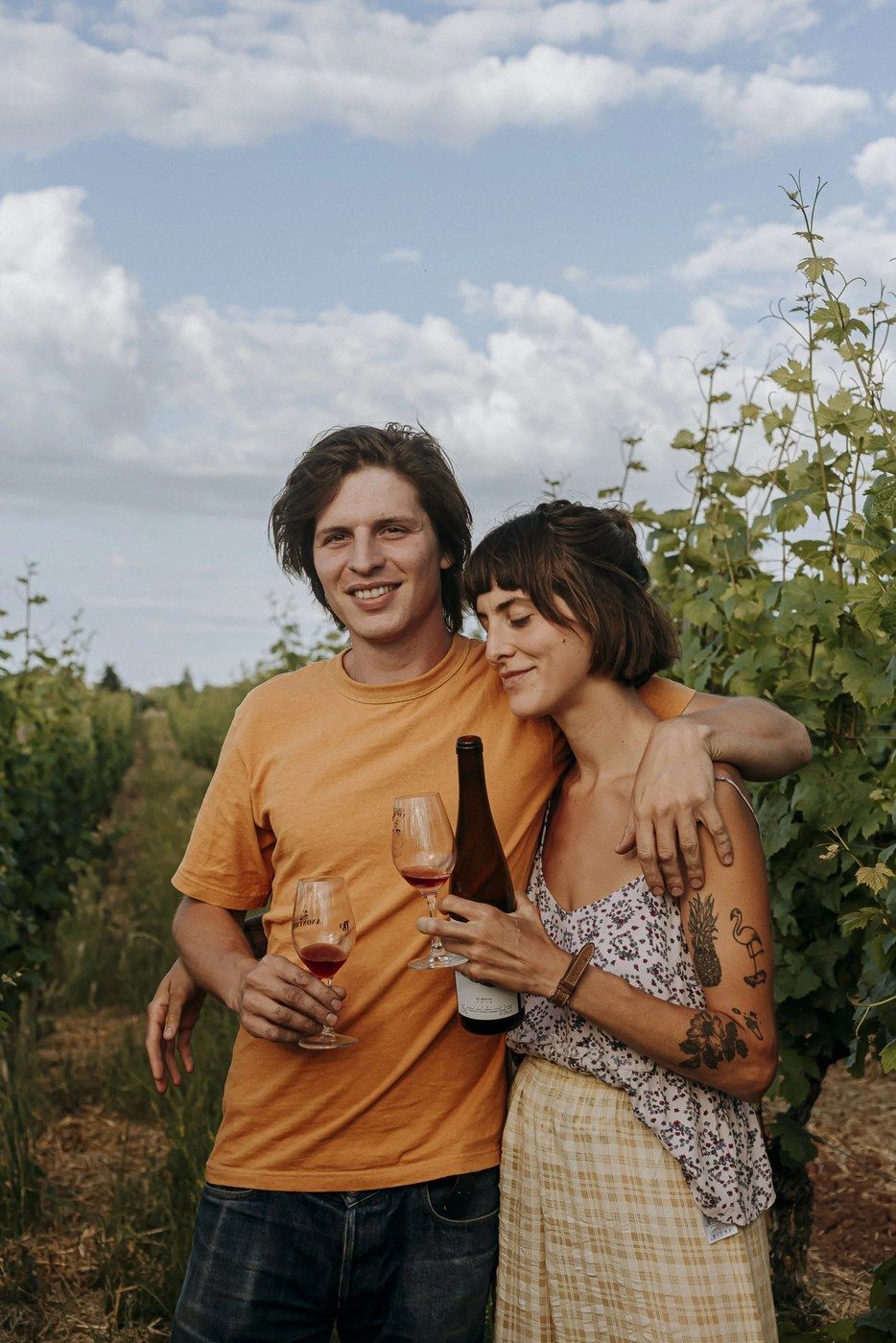
Martin Wörner and Alanna LaGamba in the vineyard
Martin Wörner's grandfather was among the first in Flonheim to bottle wine under their own name and make sweet wines. In the wake of the wine crisis of 1985 the local market collapsed, and Martin's father turned to growing strawberries and sold the grapes to other wineries. Martin studied conventional winemaking, which convinced him that wine without added sulfur "does not exist in reality" – until he tasted a bottle from Gut Oggau. The discovery led him to an internship in Burgenland and from there to the Matassa winery in Roussillon, France, under the guidance of Tom Lubbe, where his natural wine philosophy took shape. Lubbe gave him two old barrels for his first vintage, and in 2016 Martin made two vintages in parallel – in France and in Germany.
The winery is housed in a tiny 30 m² cellar beneath the family home, which once served as a tavern for merchants on their way to the French border. His partner in life and in work is Alanna LaGamba, and her wines carry her name. The vineyards are farmed organically, with natural plant cover and sheep grazing between the rows, and without plowing. In the cellar a single, pure method is kept: fermentation with wild yeasts, about two years on the full lees in old oak barrels, and bottling unfined, unfiltered and with no added sulfur. Because German law prohibits naming the village (Flonheim) on Landwein labels, the labels bear a drawing of a rock – a tribute to the village's famous red sandstone quarry. Distributors in London and New York count Marto among the most sought-after natural wine producers in Germany, and perhaps among the most influential of them, one that has inspired many of the people of the new German wave.